AI on the shop floor: what works for North Wales manufacturing and engineering
Manufacturing gets sold the most ambitious version of AI and needs the least ambitious one. What is actually working in North Wales workshops and factories, and the capital grant worth knowing about this month.
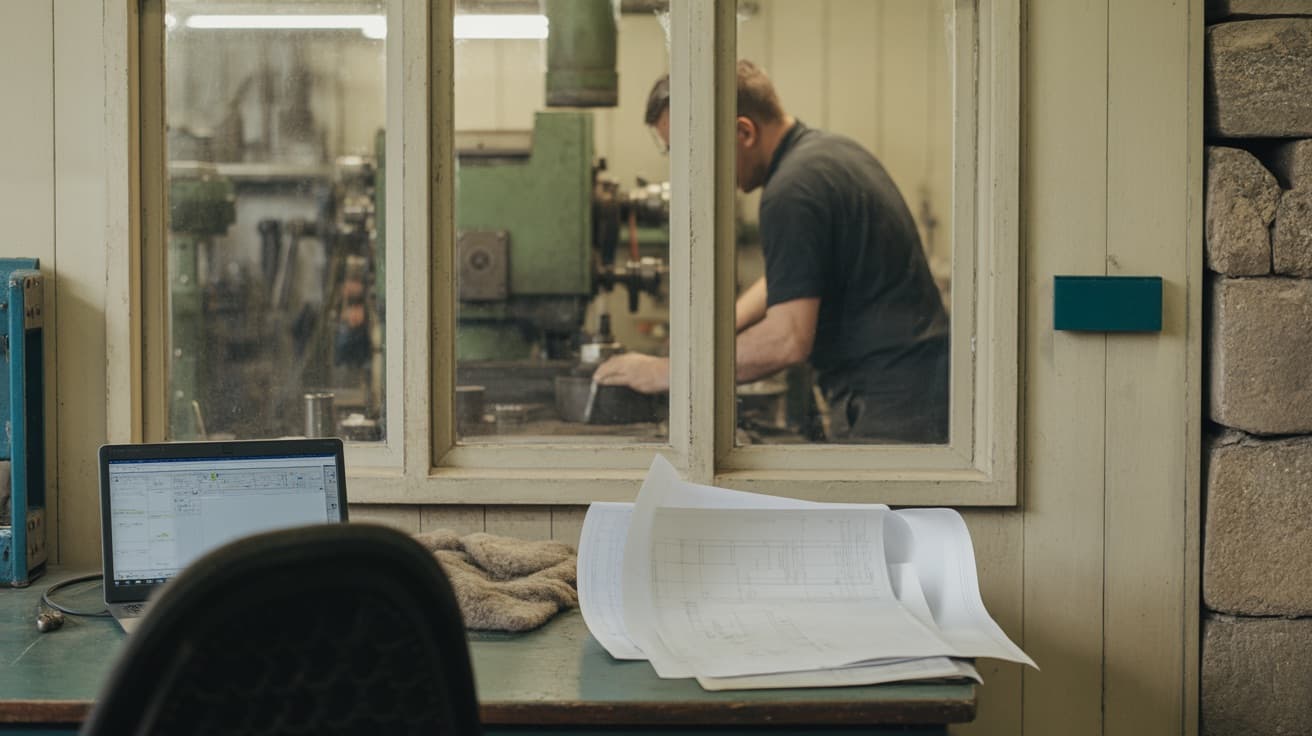
Manufacturing gets pitched the most futuristic version of AI of any sector. Predictive maintenance, digital twins, autonomous quality control, a dashboard that knows the machine will fail on Thursday. Some of that is real at scale. Almost none of it is where a 30-person engineering firm in Deeside or Llanberis should start.
The things actually working in North Wales workshops are duller and considerably cheaper. They are mostly about the office rather than the shop floor, which is not what anyone expects.
Quoting and estimating
The clearest win, and the one most firms have not tried.
A drawing and a specification arrive. Someone experienced spends an hour or two working out what it takes to make, pricing materials and labour, and writing the quote up. That person is usually the owner or the works manager, and quoting eats their week.
AI does not price the job. What it does is turn the pricing you have already worked out into a properly written quotation, in your format, with the assumptions, exclusions and lead times spelled out. The technical judgement stays with the person who has it. The forty minutes of typing does not.
Firms doing this report quote turnaround dropping from days to hours, which matters more than the time saved. In fabrication and machining the first decent quote in often wins.
Tenders and specifications
Public sector and large-contractor tenders run to hundreds of pages, and the parts that matter to you are scattered through them. Reading one properly is a day nobody has.
Loading the document and asking specific questions works well: what are the certification requirements, what are the payment terms, what is the penalty structure, what does it say about materials traceability, is there anything unusual in the delivery obligations. It turns a day of reading into an hour of checking.
The rule is the same as anywhere: it finds the clauses, you decide what they mean. AI document processing covers the pattern in more depth.
Method statements and paperwork
Risk assessments, method statements, quality plans, ISO documentation, customer-specific procedures. Manufacturing runs on paperwork that has to be right, has to be consistent, and is nobody's favourite part of the job.
AI drafts from your existing documents and your description of the job. A competent person still reviews and signs it, because that signature means something. But drafting from a blank page is where the hours go, and that part is now much shorter.
One caution specific to this sector: never let AI invent a standard, a tolerance or a certification number. It will produce something plausible. Anything that references a specification gets checked against the actual specification, every time.
Training and handover
A real problem in North Wales manufacturing is that the person who knows how to set up the old machine is 61 and retiring. That knowledge is in their head and in nobody's documentation.
A workable approach: record them talking through the setup, transcribe it, and have AI turn the transcript into a structured procedure they then correct. It is far easier to get an experienced operator to fix a draft than to write from scratch, and it gets done in an afternoon rather than never. The transcription post covers the mechanics.
Where it does not belong yet
Anything safety-critical without a human decision. Obvious, but worth stating.
Vision inspection, unless you have volume. Camera-based AI quality inspection genuinely works, but it needs consistent parts, consistent lighting and enough throughput to justify the setup. For high-mix low-volume work, which is most of the sector here, the economics rarely land.
Predictive maintenance without sensor data. You cannot predict a failure with no data about the machine. If your equipment is not instrumented, this is a two-year project and a capital decision, not an AI one.
The grant worth knowing about
The SMART Flexible Innovation Support Capital Equipment Fund offers £50,000 to £250,000 towards buying and installing machinery and equipment that improves productivity, for organisations operating in Wales. The current round closes at 23:59 on 25 September 2026. Since 2023 it has backed 171 organisations with over £20.1 million.
Two things to be clear about. It is a productivity and equipment grant, not an AI grant, and the £50,000 floor means it is not aimed at the smallest firms. But if you are already planning a capital purchase, the instrumentation and data capture that make later AI work possible can sit inside that application as part of the productivity case.
That is the sensible sequence: buy the machine with the sensors, gather the data for a year, then talk about predictive anything. The funding post covers the other routes, including training support.
Where to start
- Take your last ten quotations. Try drafting the eleventh with AI from your own pricing, in your own format.
- Take the next tender document. Ask it the ten questions you always have to hunt for.
- Pick the operator closest to retirement and record one setup procedure.
- If you are buying equipment anyway, look at SFIS before 25 September and make sure the data capture is specified in.
None of that is a transformation programme and none of it needs a consultant to start. The manufacturing sector guide covers the wider picture, and a discovery call is free if you want to work out which of the four is worth your week.